 by
by Each day, without asking anything in return, the Earth graciously sustains and nurtures us. She offers the fragrant air we breathe, the water that nourishes us, the fertile soil and seeds that produce our food, and the quiet beauty that restores our spirit.
In the rhythm of modern life, it’s all too easy for these plentiful gifts to go unacknowledged. And most of us move through our days without even thinking to offer a heartfelt “Thank You.”
In the Andean traditions of Peru, there is a guiding principle known as ayni—sacred reciprocity. Ayni is the understanding that life thrives through mutual exchange, in a continuous flow of care and respect between all beings—humans, animals, the natural world, and even the energies and beings of the unseen world.
We’re All Connected
All of nature – the mountains, rivers, stones, plants, animals – the elemental forces of Fire, Earth, Water, and Air – is intricately connected to the human world. We exchange energy, air, and resources in myriad ways. The natural world reflects our inner landscape, and our inner state and resulting actions affect the physical world around us.
In our worldview, Pachamama—Mother Earth—is a living, conscious presence who nourishes and supports all life. And just as we would never take endlessly from a loved one without offering something in return, we give back to her through this practice. It’s a way to honor her beautiful gifts and maintain the harmonious flow of life.
What Is a Nature Mandala?
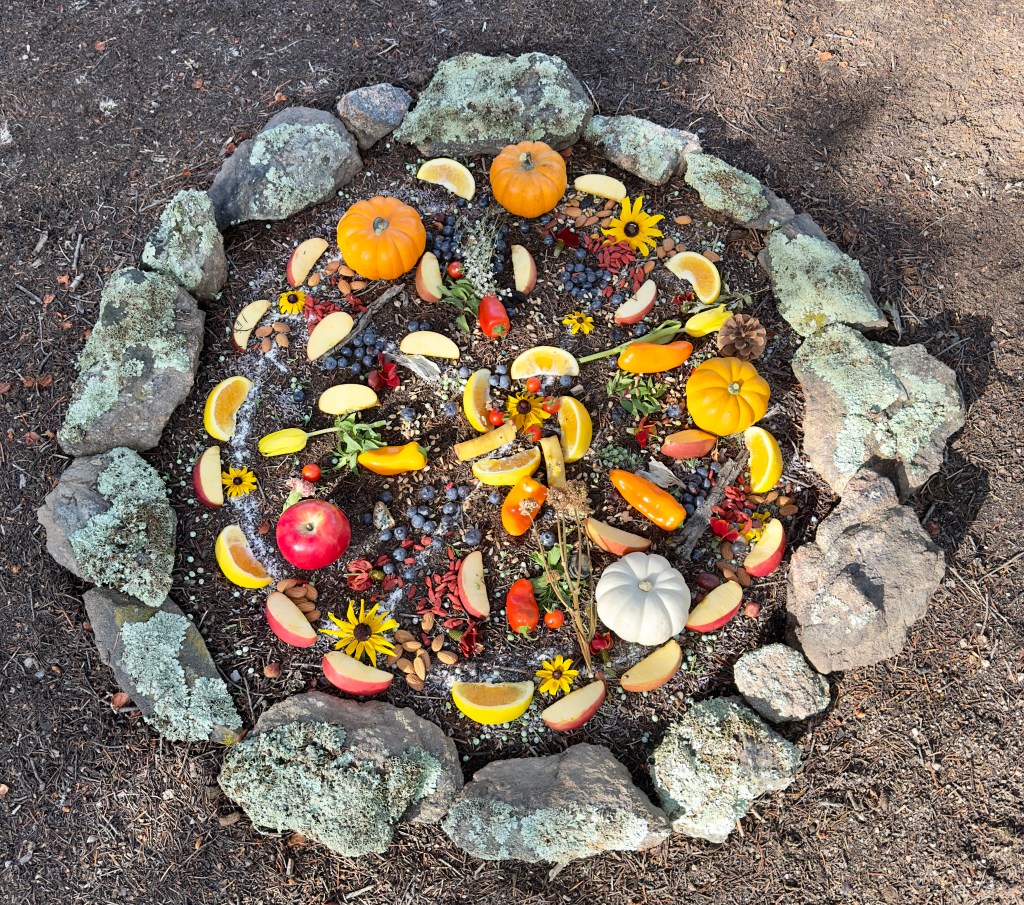
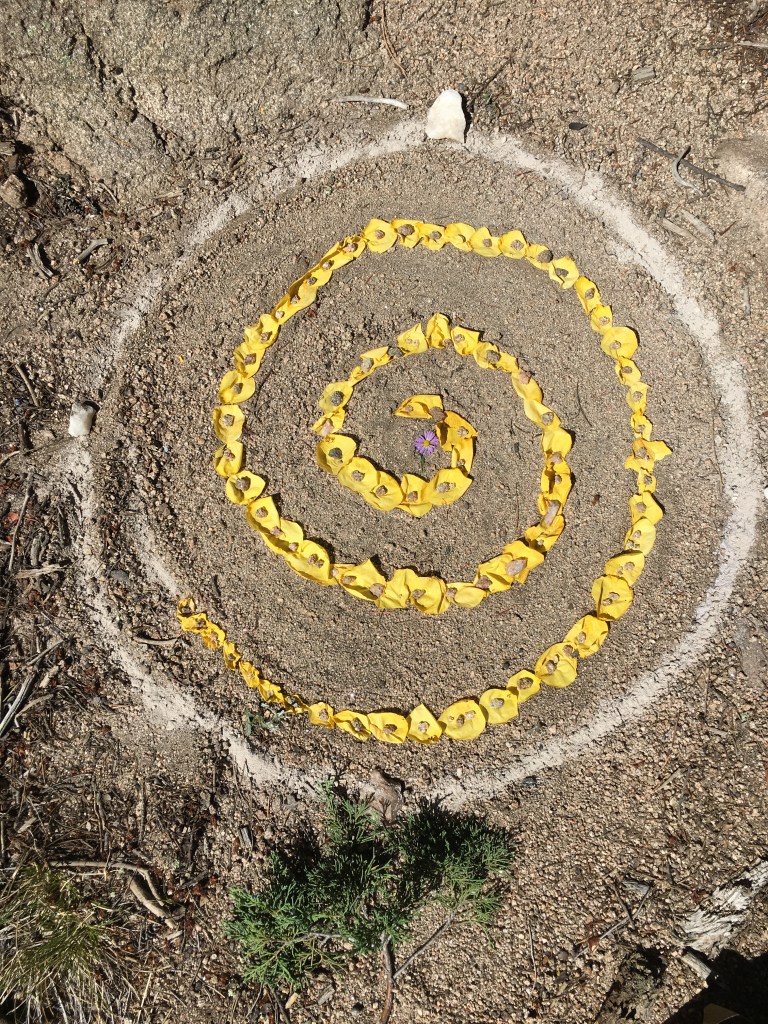
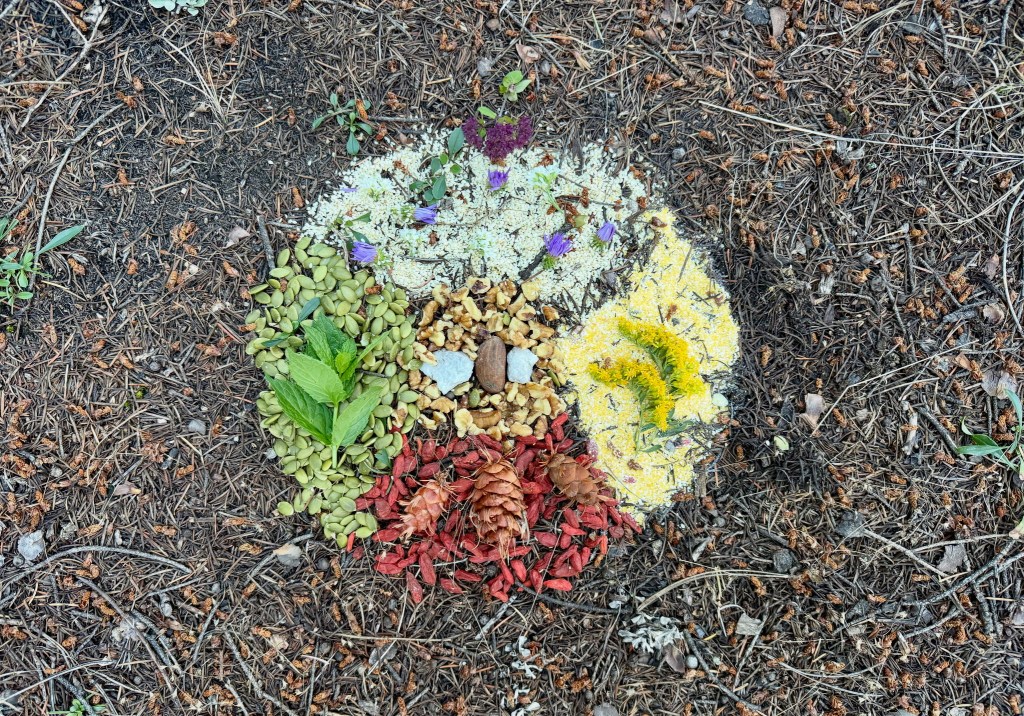
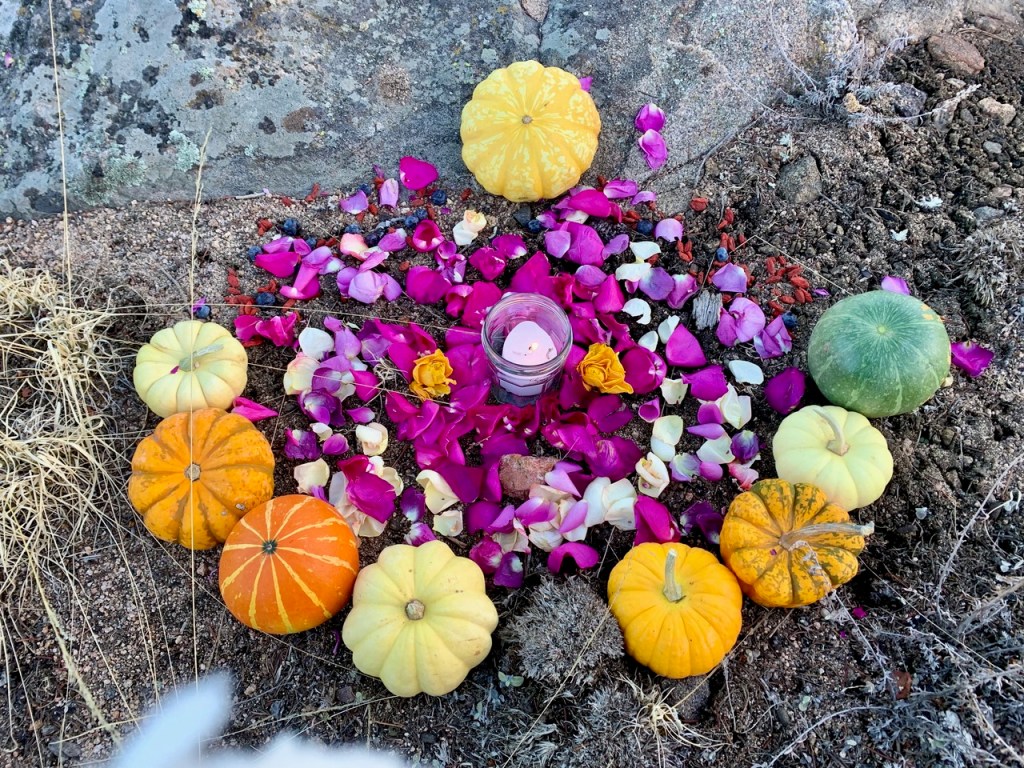
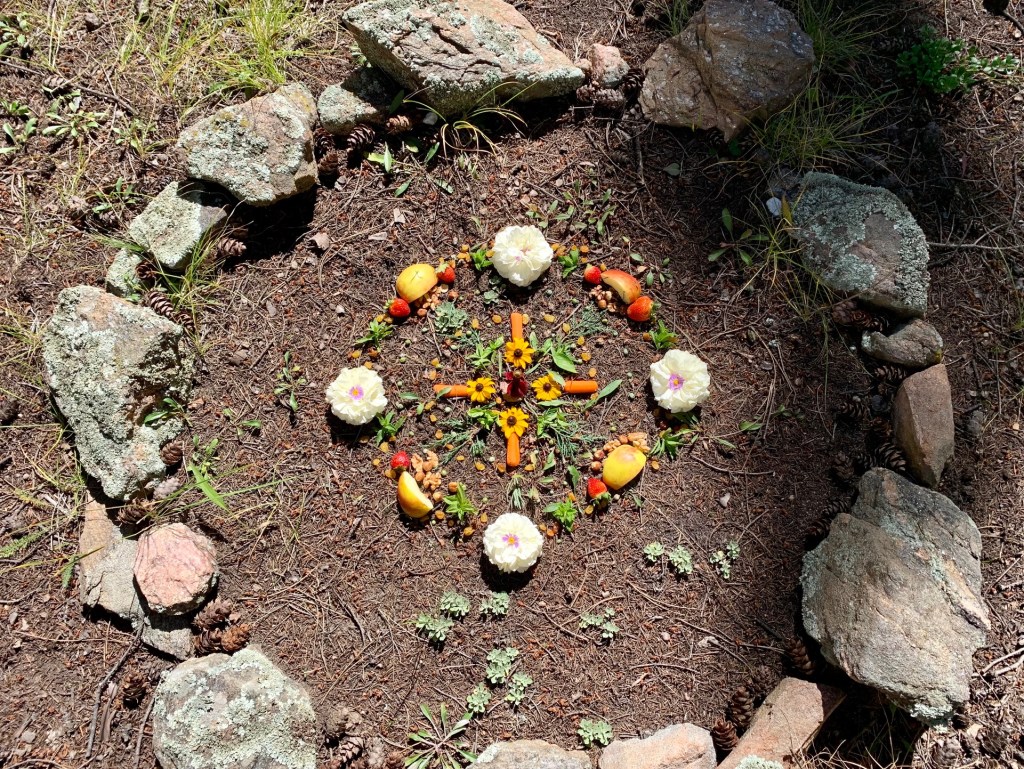
A nature mandala is a simple, intentional arrangement of natural elements—leaves, stones, flowers, seeds, nuts, berries, and more—placed directly on the Earth in a circular or symmetrical design.
More than just a visual arrangement, it is an offering of gratitude and prayers. Each element is thoughtfully selected to represent sustenance, beauty, potential, deliciousness, roots – whatever you would like to transmit to Mother Earth.
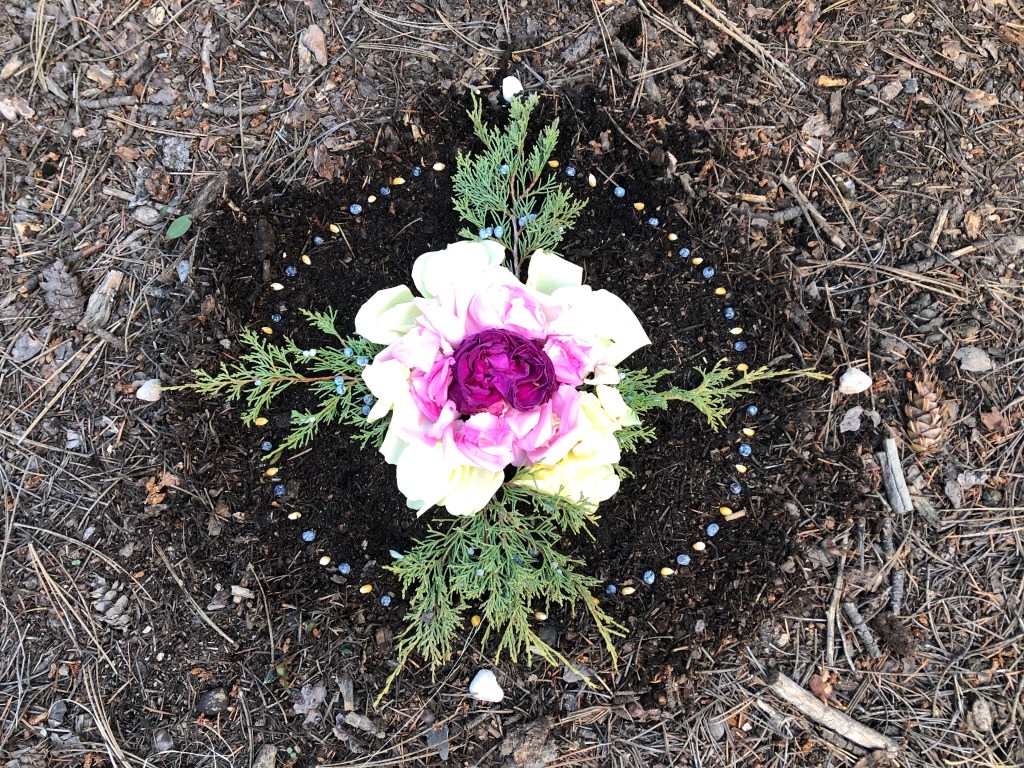
The process helps you focus your thoughts and invites a sense of awareness, appreciation, connectedness, and presence.
A mandala is intended to be temporary. Left outside in the elements to feed the birds and squirrels and other life – once you make this offering of beauty you simply release it into nature. The impermanence that comes with it is part of the way that you honor the flow of life.
How to Create Your Offering
What’s most important in this exercise is your intention. What would you like to give thanks for? And do you have any deeply heartfelt prayers for the planet, or your community?
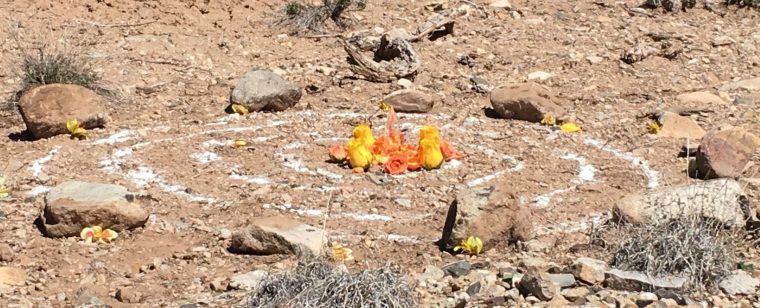
Find items you may already have at home – seeds, berries, lentils, nuts, flowers, herbs. leaves – anything that somehow represents what you’d like to express. Then go to a quiet place outdoors like a park, an open space, a forest, your backyard, or just a small patch of earth.
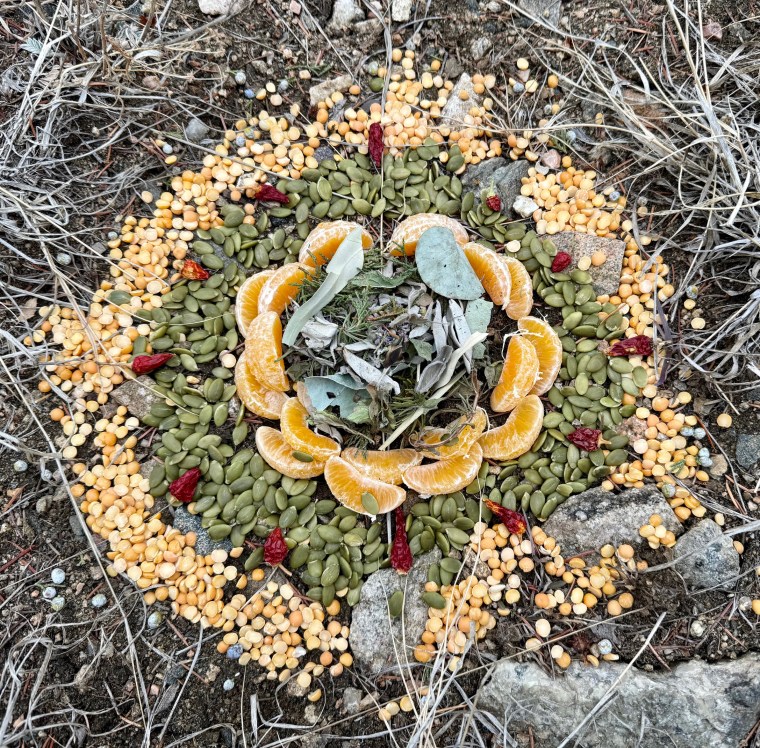
Take some deep breaths to help you become very present, noticing what’s around you. Then connect with your heart and name your gratitude – all the things you appreciate that the Earth has given you. And all the gifts or blessings in your life. It’s also powerful to say prayers, sending blessings to the planet, your loved ones, and any situation you’d like to bring some additional love and care to.
As you create your mandala, let it unfold intuitively. You might create a circle to frame your canvas, start from the center and work outward, or move in patterns that feel meaningful to you. There is no right or wrong way.
When you feel like it’s complete, sit with it. Ask it to anchor your gratitude.
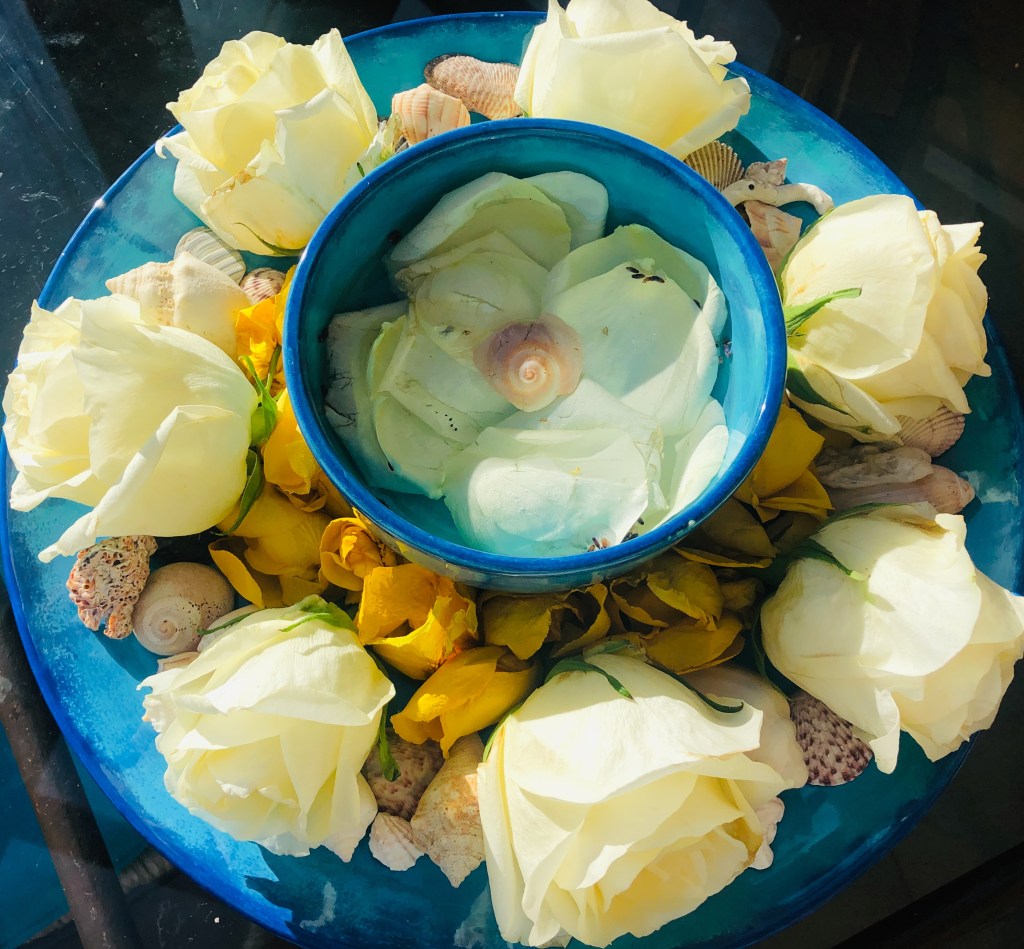
Experiencing Ayni
When you engage in this practice, something subtle begins to shift. Gratitude moves from being just a thought into something more palpable that you can feel in your body. A sense of connection emerges that links you to the Earth and to the spot in nature you chose. You can sense the flow of energy between you and the world around you.
It invites a softening. A reminder that you are held within a vast web of life that is constantly giving—and you are part of that exchange.
Creating a Practice
Creating nature mandalas doesn’t have to be reserved for special moments, though it is a lovely way to celebrate the solstices and equinoxes. It can become part of your everyday rhythm as a mindfulness practice when you’re out in nature:
- A small arrangement of leaves on a morning walk
- A circle of stones placed with intention
- A thoughtful design made from flower petals
- A quiet “thank you” offered to the earth as you leave your home
These small acts reorient us toward relationship. They remind us that giving back doesn’t require grand gestures, just heartfelt sincerity. Sometimes I simply bend down and place the palm of my hand on the Earth–and say thank you until I get the sense that my appreciation was received.
A Way of Life
Ayni – in the sense of mindful reciprocity – is a way of living. How we walk on the earth, how we use resources, how we care for others, and how we respond when we have more than we need, all matter deeply. When we make careful, loving, conscious choices, life and relationships flourish around us.
Everything is connected—and we can actively make those connections more harmonious. By offering gratitude and beauty back to the earth, even in the simplest form, we strengthen those relationships. And in doing so, we remember:
We belong to a much greater divine power that animates all life, and we are an integral part of its magnificent, continuous, mysterious flow.


Leave a Reply