 by
by Last Thanksgiving I returned to the Peruvian Andes with my family, to share the sacred sites, rituals, phenomenal food, and cultural wisdom with my husband and sons. The spiritual lineage of the Q’ero people of the Andes is the foundation for my shamanic healing work – passed to my teacher decades ago, who then transmitted it to me.
In and around the city of Cuzco, the sacred center of the Inka empire, ancient wisdom for everyday life continues to thrive. It’s woven throughout daily life and evident in the respectful way people treat one another. You notice a palpable sense of peacefulness and natural flow that’s hard to come by in most modern cities.
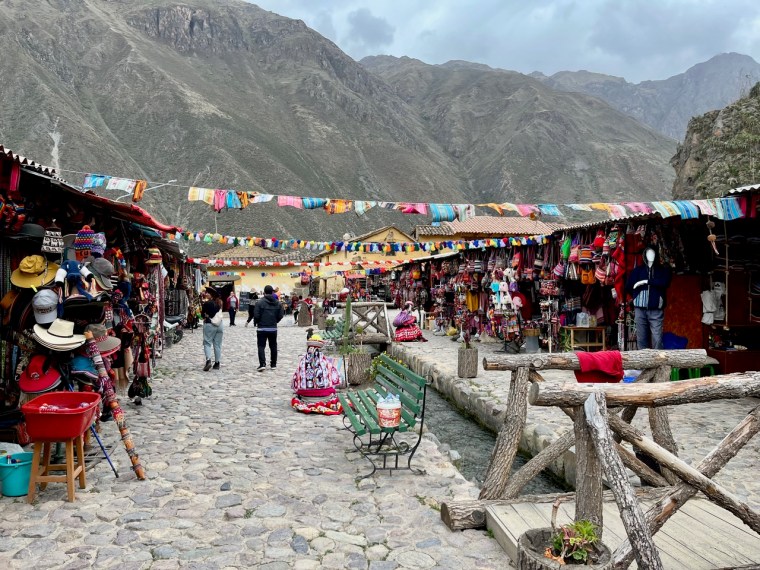
The Quechua people of the region preserve a practical spiritual approach to life that helps keep the world in balance amidst inevitable conflict and challenges. Much of their wisdom revolves around harmony and reciprocity, and taking personal responsibility for all of our words, decisions, and actions.
Simple habits like asking permission before taking something of the earth, and then offering gratitude in return, were evident in many natural areas and sacred sites we visited. We came across coca leaf offerings, coins, and evidence of pagos or despachos (offerings of items imbued with prayers and gratitude) and offered our own.
Managing Conflict
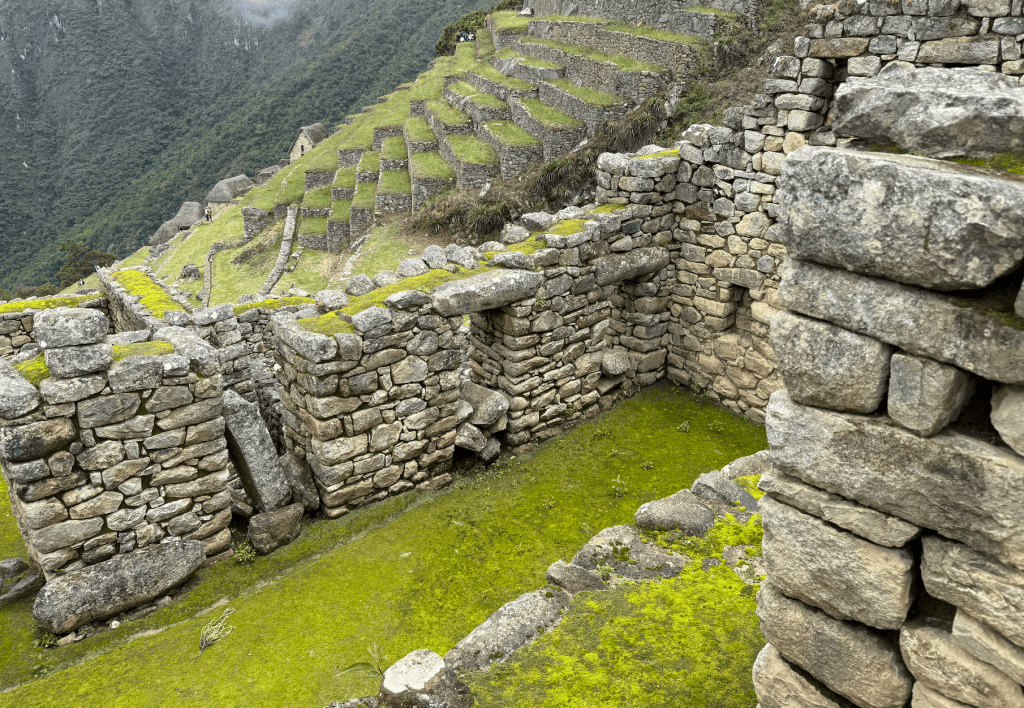
At one point we were perched on a rocky outcropping overlooking some old Inka ruins in the mountains outside of Cuzco, after following long winding trails on horses into the secluded area dotted with sacred sites, temples, and caves.
Our guide, grandson of a revered Quechua medicine woman and healer himself, paused to tell us a story. He pointed to a nearby mountaintop and narrated how in his community when you are really angry with someone, the traditional way of resolving the conflict involves hiking up to the top of a tall mountain to burn wild grasses and ask for forgiveness.
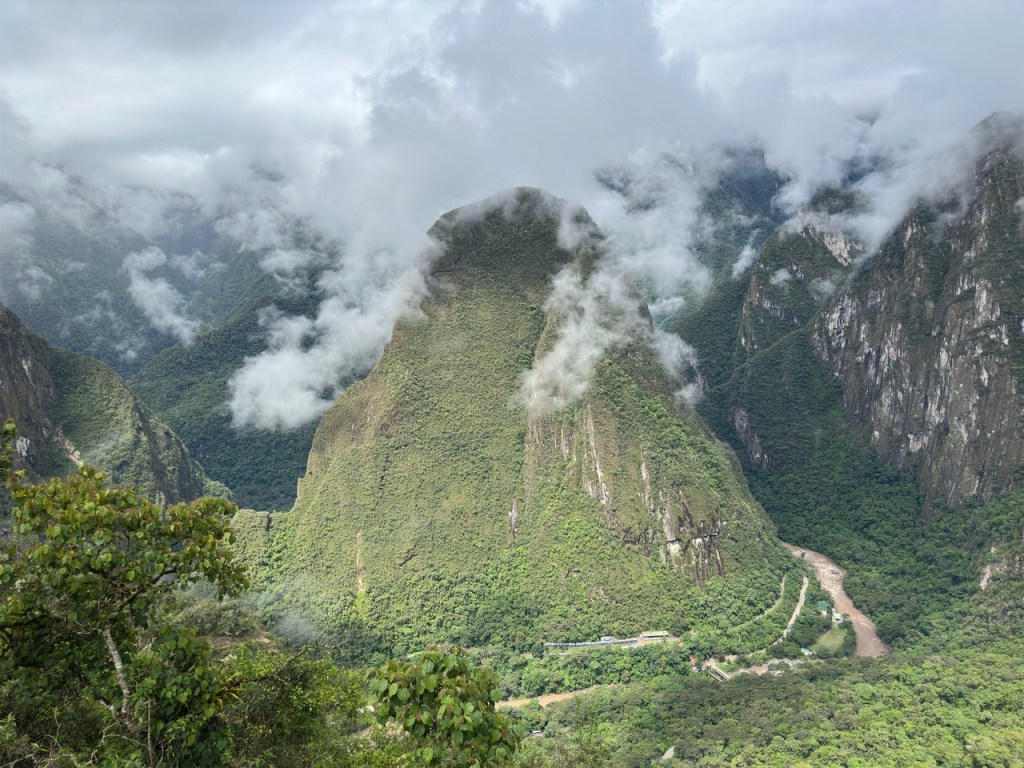
By the time you reach the top you’re physically exhausted. The uphill trek weakens your anger by simply wearing you down. Once you finally arrive at the top of the mountain, you step into an expansive view of the community below – and naturally adopt a higher perspective.
Now you burn a bundle of dried grasses, representing your anger, and watch it disappear as it’s carried on the wind. You take responsibility for your role in provoking whatever this person did to anger you, even if you don’t understand how. Perhaps you triggered some issue or wound in them. Or you weren’t clear about your own boundaries, so this person crossed them. Regardless of how or why, you must ask for forgiveness for your part in the conflict.

If you still can’t make sense of your role in the conflict you’re so angry about, you remember that there are greater explanations beyond the reaches of your conscious mind.
Perhaps this conflict will lead to a necessary shift in your behavior. Maybe it will provoke reactive decisions that take you down a different path — one that your soul is longing for. In the moment things often feel murky, but in hindsight they become crystal clear. Your view from the mountain top reminds you of this.
Taking Personal Responsibility
Our guide reminded us that even the most “evil” person is like a dog who was kicked and wounded, so it only learned how to bite. It is our responsibility to see people and situations for what they are, without judgment and blame.
No matter how difficult our life has been, we have the power to change our lives and the world around us by making thoughtful decisions. And acting with consistency and discipline. The overarching rule is that we must take responsibility for how we treat others and how we act. And remember that even a small shift in our energy, words or behavior, can change everything.

The leader who unified the Inka empire, Pachakuteq, established three strict rules to help the empire live in unity and prosper. People continue to recite these rules in Quechua today, as core guiding principles to keep people from straying off track in life:
- Don’t Steal (Ama Sua). Accept what you have and don’t envy others, wish them harm, or take what belongs to them.
- Don’t Lie (Ama Llulla). Respect those around you and don’t dishonor them with lies or humiliation. Be like the sun who shines brightly. (Lies bring darkness and shadows).
- Don’t Be Lazy (Ama Qella). Work hard and take responsibility for yourself and your actions. Contribute positively to society and your surroundings.
Those guiding principles help people make better decisions in their daily lives. There is also an underlying spiritual philosophy that guides the interplay of life in the Sacred Valley region.

Maintaining Balance
One core principle is Ayni, which could be translated as sacred balance and reciprocity. It refers to the uninhibited flow of beneficial energy between one person and another, between people and nature, where care is given freely. In essence it is the balanced giving and receiving of loving and supportive energy between all living things.
Ayni helps to keep the world in balance. Giving and receiving in harmony and respect, helps maintain the fabric of life. We give when we see people in need, without asking anything in return. We humbly accept what we are given, and trust that we are always supported and taken care of. As long as we participate in this reciprocal flow, life is balanced.
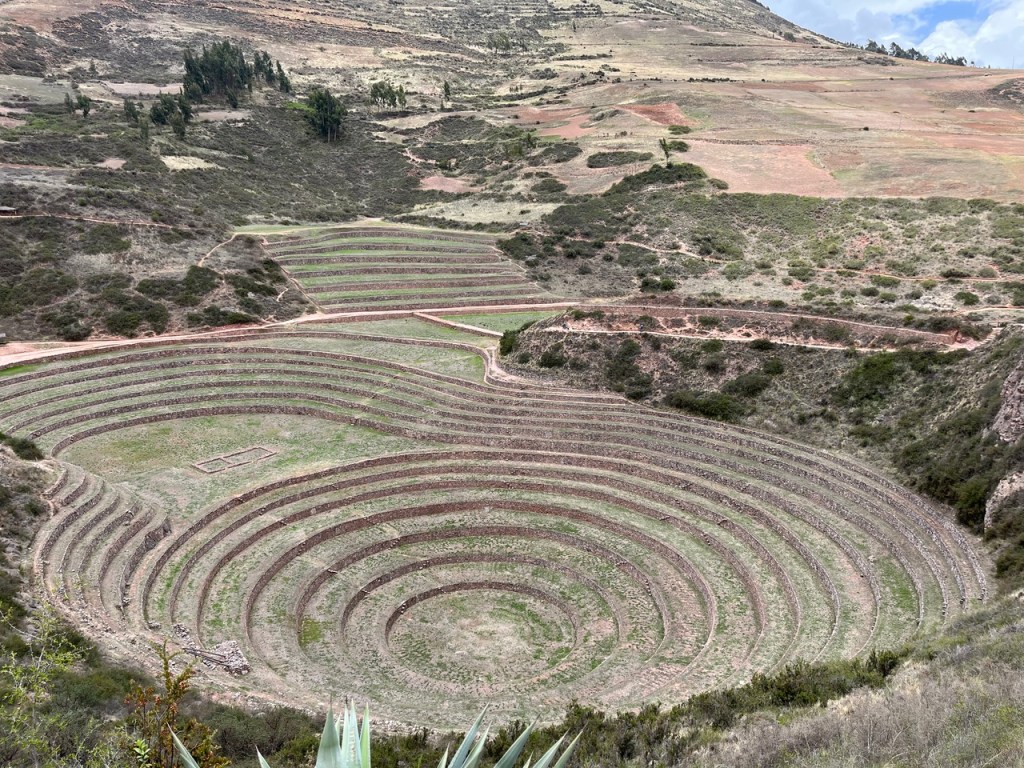
A second core principle is the balance of masculine and feminine energies. This principle is embodied in daily life through separate but complementary responsibilities for men and for women. At a broader more spiritual level, this same balance is maintained through rituals and ceremonies that honor the sun and moon, the mountains and the earth, fertility and harvest – all of which represent the greater masculine and feminine.
Offerings
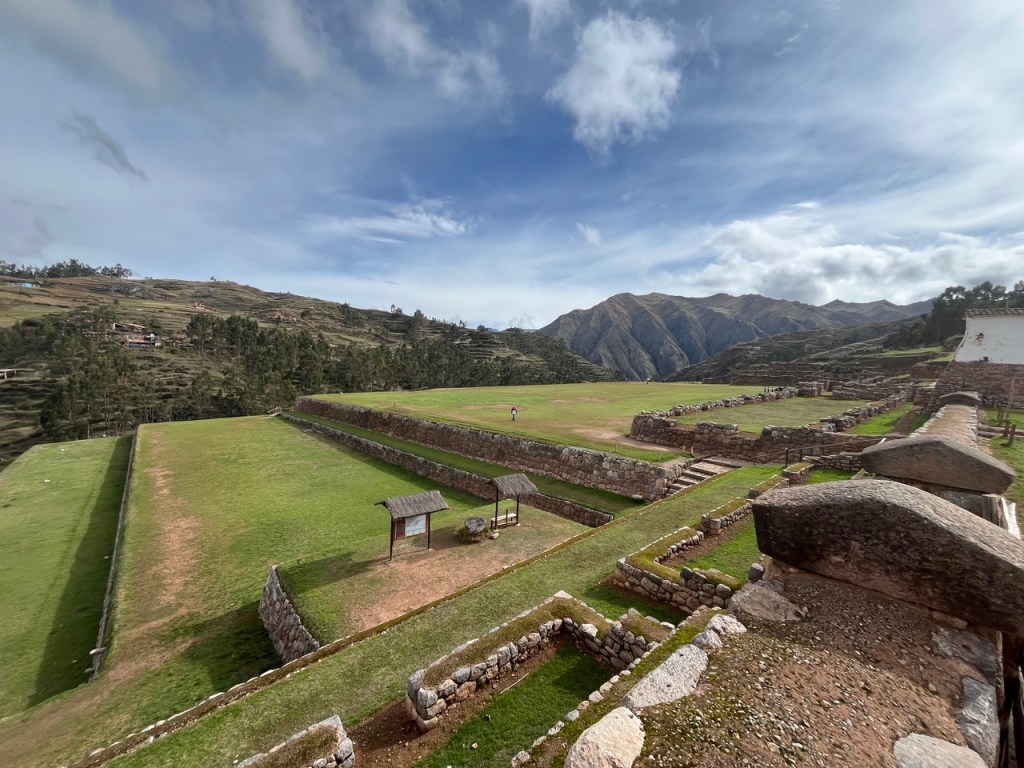
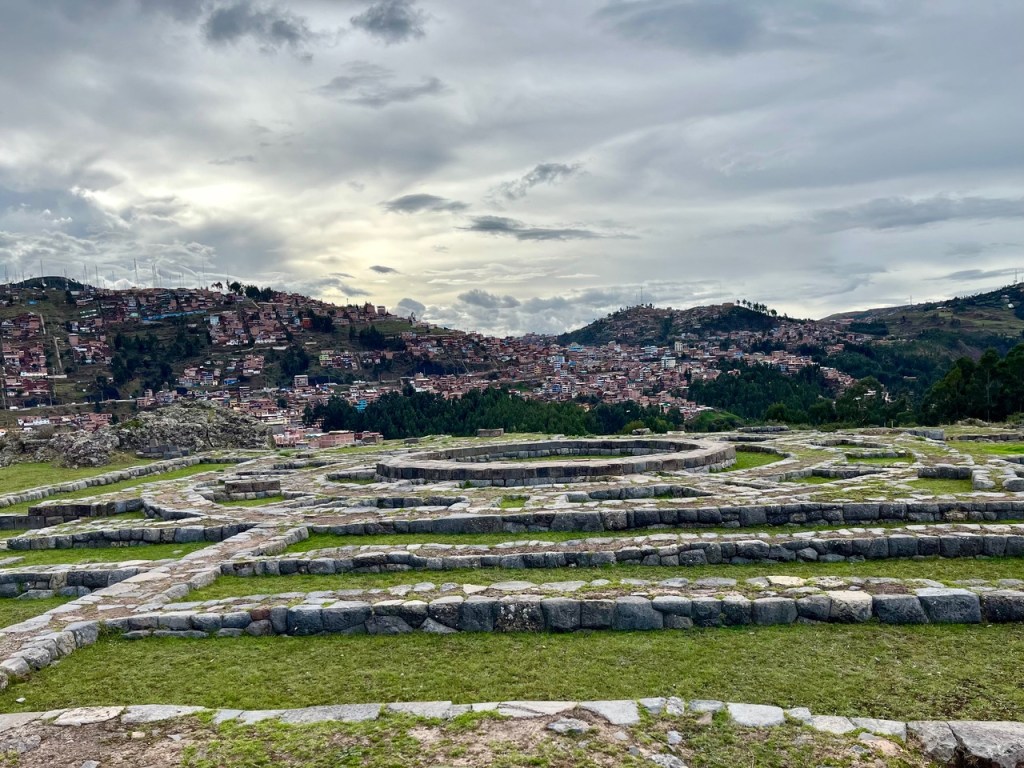
We explored the Sacred Valley of the Inkas including the continuously inhabited city of Ollantaytambo and its Inka temples, Chincheros, Moray, many hidden sites and temples in the mountains just outside of Cuzco, and of course, Machu Picchu.
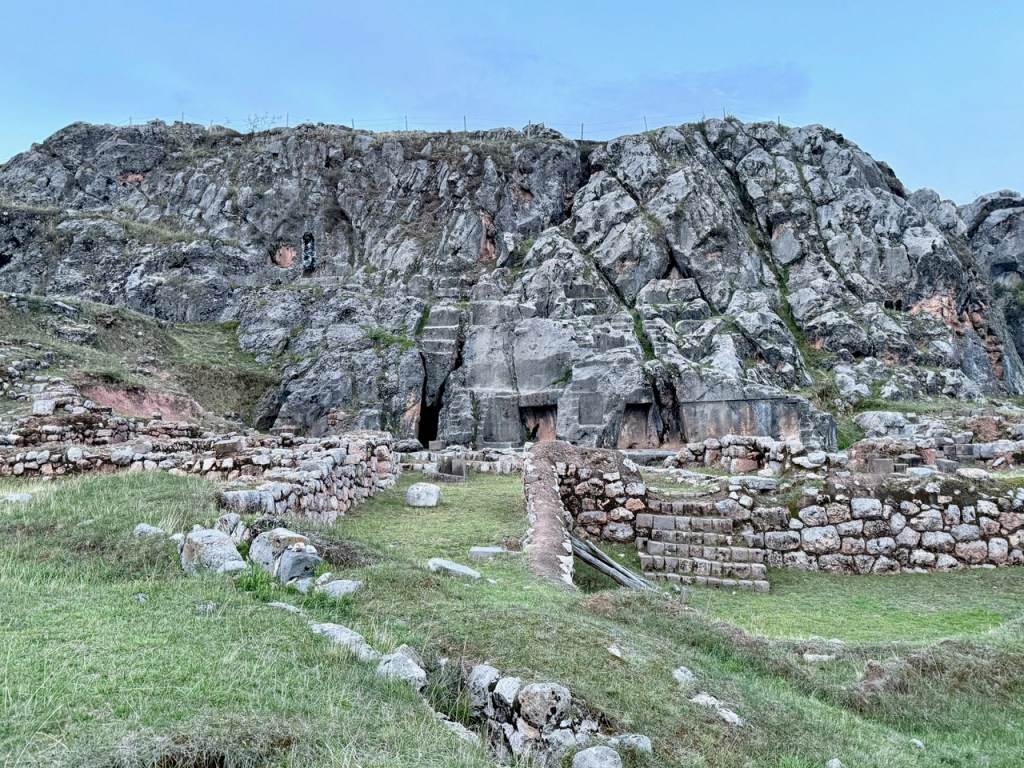
As we learned about the sites and spoke with gudies and local people, it became clear that every detail of construction was steeped in spiritual meaning and reflected a powerful vision of life and our place in the cosmos.
In many places, we found fresh offerings of flowers, coca leaves, corn, incense, and other items – placed there with prayers to maintain the balance of life.

It seemed as if every mountain, temple, shaped stone, doorway, and stream of carefully guided flowing water carried intentional meaning. Nearly everywhere we went felt steeped in a mystical energy, fed and maintained through prayer and care. This exquisite energy in the Sacred Valley of the Inkas stirs something in nearly everyone who visits.
I believe that we can bring the sacred home, into our own lives, by following these nuggets of Andean wisdom:
- Care for the people and natural world around us
- Step forward when we are needed or can be of service
- Take full responsibility for our words and actions
- Make beautiful offerings of prayers and gratitude
In this way we uplift the energy in our own homes and sacred spaces. We maintain that reciprocal flow, and live in harmony and respect with our human and non-human relations.
 ewassa
Leave a comment